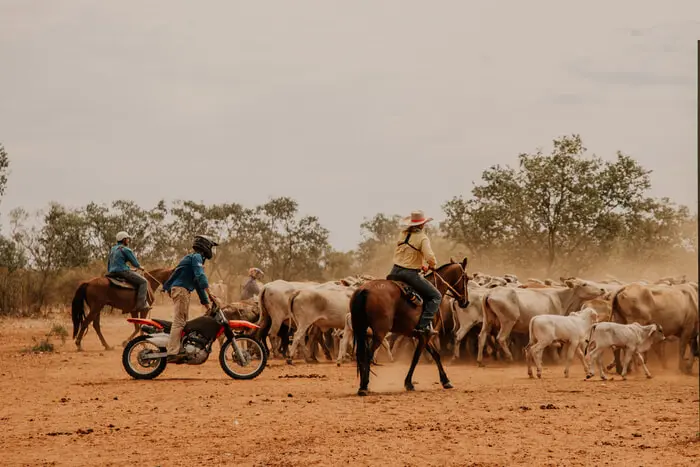
So you’ve heard the stories from those who have experienced working on an Australian cattle station – it could be Mum or Dad or brothers or sisters or mates… or some old fella ‘holding up the bar’ down the pub telling a few bronco branding yarns from his ringing days on a Kimberley cattle station. People love to talk about their time on stations, sharing tales of hard work, camaraderie, and unforgettable moments.
Working on a cattle station is a uniquely Australian experience, and it’ll bring you great satisfaction, fond memories, handy life skills and a bunch of mates for life. The lifestyle that comes with station work shapes your values, work ethic, and sense of adventure. A cattle station is a great opportunity for personal and professional growth, career development, and a rewarding experience in livestock and cropping operations. A cattle station is a great place for personal growth and making lifelong friends — and with ‘hiring season’ for most stations to begin around September/ October for the 2026 season, there’s never been a better time to saddle up and give it a crack. Recruitment for the 2026 cattle season peaks in September and October 2025, and can extend into January 2026.
Whether you’re a school leaver, a career changer, or wanting a lifetime on the land, here’s what you need to know about landing a job on a cattle station in 2026. Station work offers a life-changing opportunity to gain practical skills, confidence, and a new perspective on rural life.
Keep in mind, if you are heading to a northern station (i.e. Kimberley, Pilbara, Gulf Country, NT), most stations will want a commitment from you to do a full season minimum – i.e. April through to November.
Please note: To apply for jobs listed on RFTTEJOBS.com, you must be an Australian permanent resident or hold a valid visa that allows you to live and work in Australia.
The majority of employers advertising on our platform can only accept applicants who already have the legal right to work in Australia.
WE DO NOT ACCEPT OVERSEAS APPLICANTS FOR ANY JOBS ON THE PLATFORM, NOR DO EMPLOYERS OFFER SPONSORSHIP VIA RFTTEJOBS.COM
If you do not currently hold an appropriate visa, you can find detailed information and apply through the official Australian Government website:
👉 immi.homeaffairs.gov.au
The Australian cattle industry is one of the cornerstones of the nation’s agricultural sector, with vast cattle stations and sheep stations stretching across the country’s diverse landscapes. These large-scale cattle properties are not only vital for producing high-quality Australian cattle and sheep, but they also create a wealth of employment opportunities for people from all walks of life. Whether you’re interested in becoming a station hand, a cook, or taking on a support role, there’s a place for motivated individuals who are ready to embrace the unique opportunity that station life offers.
Many stations, especially those in the Northern Territory, are renowned for their commitment to animal welfare, ensuring that livestock are cared for to the highest standards. The cattle industry takes pride in maintaining healthy herds and sustainable operations, which is why training and skill development are highly valued on-site. For those seeking the latest jobs, many stations offer on-site accommodation and meals, making it easier to settle into life on the land. With a strong focus on teamwork and personal growth, working on a cattle station is more than just a job—it’s a chance to develop new skills, experience rural Australia, and become part of a community that values hard work and dedication. Whether you’re looking to start your career or simply want to experience something different, the cattle industry in Australia provides a great place to learn, grow, and make a real impact.
Living and working on an Australian cattle station is an adventure that comes with its own set of challenges and rewards. Most stations are located in remote areas, where mobile coverage can be limited and access to shops or services is often a long drive away. However, many stations go above and beyond to provide comfortable accommodation, hearty meals, and essential facilities for their employees. It’s not uncommon to find air-conditioned rooms, Wi-Fi, and communal spaces where the team can relax after a hard day’s work.
As a station hand or in any other role, you’ll be expected to take pride in your work—whether that means maintaining fences, caring for livestock, or helping out wherever you’re needed. A strong work ethic and a willingness to learn are more important than previous experience, as most stations offer job training and support to help you succeed. Many stations in regional NSW, Alice Springs, and other highly valued locations are always on the lookout for reliable, motivated individuals for both full-time and part-time positions, with immediate start roles often available.
The sense of community on a cattle station is one of its greatest strengths. You’ll work closely with a team, share meals, and take part in social events, making it a great place to build friendships and create lasting memories. Whether you’re interested in a cook position, working with horses, or taking on the responsibilities of a station hand, there’s a wide range of tasks to get involved in. Some stations even allow employees to bring working dogs, adding another layer to the unique lifestyle on offer. With opportunities for career advancement, ongoing training, and the chance to be part of something bigger, life on an Australian cattle station is a truly rewarding experience for those ready to give it a go.
Stepping onto a cattle station is stepping into a world unlike any other in Australia. These vast properties, especially those scattered across the Northern Territory, Queensland, and Western Australia, are large-scale cattle properties involved in farming and livestock management. Staff on cattle stations are responsible for caring for animals such as cattle and sheep as part of their daily duties. Life on a cattle station is more than just a job—it’s a lifestyle that demands a strong work ethic, adaptability, and a willingness to embrace the challenges of remote living. While mobile coverage can be patchy and the days long, the rewards are immense: you’ll gain practical skills, forge lifelong friendships, and become part of a close-knit team that keeps the station running. Whether you’re looking to kickstart your career, try something new, or simply want to experience life on the land, cattle station jobs offer a unique opportunity to work hard, learn fast, and be part of an industry that’s truly iconic to Australia.
Cattle stations are often located in remote areas, requiring staff to live on-site.
Cattle stations are bustling communities with a wide variety of jobs to suit all kinds of skills and interests. The station hand role is at the heart of the action, typically a full-time, permanent position on a large-scale cattle property in regional NSW. Station hands work directly with cattle and livestock, handle horses, help with mustering, and take on other cattle management tasks. They are also responsible for farm labour, conservation duties, and helping to maintain equipment, fences, and watering points to ensure optimal operation and animal welfare. Cooks are essential for keeping the team fuelled and happy, preparing hearty meals that bring everyone together. Machinery operators are required to operate heavy plant machinery, such as graders and loaders, and keep the station’s equipment running smoothly. Governesses support the education of station kids. There are also roles for bore runners, mechanics, and tradespeople who handle everything from fencing to building maintenance. No matter your background—whether you’re handy with a horse, skilled with machinery, or have a knack for cooking—there’s a position on a cattle station that could be the perfect fit for you. Being part of the team means taking on responsibility, learning new skills, and playing an essential role in the daily life of the station.
Cattle stations — especially those in the Northern Territory, Queensland, and Western Australia — are often in very remote areas. That means limited phone reception, long hours, and physically demanding work. Employment on these stations is generally offered as permanent, seasonal, or short-term arrangements, depending on the needs of the property and the applicant’s availability. Individual stations may have their own employment arrangements and requirements, so it’s important to check with each one directly. Working conditions are generally tough but rewarding, with a strong sense of community and teamwork. But it also means breathtaking sunrises, lifelong mates, and a front-row seat to one of Australia’s most iconic industries.
Most stations, especially in northern regions, often require a commitment to work a full season, so be prepared for this expectation when applying.
Here’s a good read from someone who’s done it all before: Should I work on a cattle station?
Common station jobs include:
Station Hand / Ringer (duties generally include mustering, fencing, vehicle maintenance, and water infrastructure repairs; suited to those who enjoy hands-on, outdoor work)
Cook / Camp Cook (suited to those who are organised and enjoy preparing meals for large groups)
Bore Runner (checks water points for livestock; suited to independent workers)
Mechanic (duties include maintaining and repairing vehicles and machinery; previous experience is an advantage)
Caretaker (See a video on being a Caretaker at Kalyeeda Station) (suited to responsible, self-motivated individuals)
Machinery Operator (suited to those with machinery skills; previous experience is helpful)
Truck Driver (duties include transporting livestock and supplies)
Station Feedlot roles (Pen Rider/ Livestock Hands/ Feedmill Operator)
Fencer / Handyman (duties include building and repairing fences and general maintenance)
Governess / Home Tutor (suited to those with teaching skills)
Butcher
Pilots (Rotary/ Fixed Wing)
Gardener
Manager, Head Stockperson or Overseer (suited to those with leadership skills and previous experience)
Tradespeople (such as builders, painters, and plumbers, who contribute their expertise to building yards or other infrastructure and are often in demand for employment on remote stations)
You don’t always need prior experience, but a few basic tickets or skills will give you an edge:
Driver’s Licence – A manual licence is a big plus.
First Aid Certificate – Especially valuable for remote work.
Experience in your preferred role: if wanting to work as a Station Hand, then experience with horses, bikes, or machinery – it’s not essential, but highly regarded. Some stations use horses or 2-wheel/4-wheel motorbikes (or buggies/ side by sides) to muster - some use all of the above - so be sure to check which station uses what. In other words, you might be a keen horse person, so make sure you don’t end up on a station that only uses bikes! Consideration for certain positions or advancement may depend on your level of experience and time in the role.
A strong work ethic, a good attitude and being able to work well in a team – Non-negotiable. Getting along with others is essential on a station. You must also be responsible for your own belongings and tasks, as accountability is highly valued.
No experience at all? Some employers will provide full training for entry-level roles, so don’t be put off if you’re green. But say if you want a role as a Station Hand, we suggest you get some basic horse riding or motorbike riding experience if you can. It’s important to approach station work with an open mind, as flexibility and willingness to learn will help you make the most of the experience.
When preparing for station work, make sure to bring a supply of essentials, as access to amenities and services such as internet, healthcare, or stores may be limited on remote stations.
Most stations will start recruiting for Season 2026 in September/ October (it just depends when they find out who is staying or going, and some may not start hiring til as late as December/ January 2026); With work usually beginning around March or April (some earlier depending on induction and training courses), but it’s usually dependant on when the wet season ends if you’re heading north to the Kimberley or Pilbara in WA, Top End, NT or Far North Qld.
That said, jobs pop up year-round — especially for cooks, mechanics, governesses, and replacement roles.
Tip: Get your applications in early when stations start hiring for 2026 to secure a good spot. Before you depart, confirm your travel arrangements and job details with the station to avoid any surprises. Plan ahead for how and when you will arrive at the station, especially if it is in a remote location. We’ll send you an alert when stations start to hire: JOB ALERTS.
You’re already in the right place. At RFTTEJOBS.com, our site specialises in outback and agricultural jobs — from small family-run stations to some of the biggest operations in the country.
When applying for jobs you find on our site, remember to include your contact details in your application.
Keep an eye on:
Our Facebook page at RFTTE.com (330,000+ strong!)
Weekly email alerts – make sure you’re subscribed.

When applying for a station job with a company:
Keep your resume/ CV simple and clear - and put it through spellcheck! Your resume is your first impression; take time to make it look good. A picture can also make your resume stand out - and no, not one of you in your togs on the beach in Bali!
Include a short, genuine cover letter - you could put it through AI, but be sure to tailor it to your tone - an employer can tell AI tone a mile away.
Highlight relevant experience (farm work, hospitality, sports, leadership, etc.) Remember to mention if you have horse riding or motorbike riding experience if wanting a role as a Station Hand, or experience with cattle/horses/machinery (basic mechanics) or fencing.
Mention if you have a driver’s licence, first aid, or experience in your chosen role - cooking for a cook; MC licence of a Road Train Driver, etc.
Be honest. Enthusiasm and reliability often outweigh experience.
Always include your contact details in your resume or cover letter so the company can reach you regarding your application or for references.
Remember — it takes effort to land a job or, as we like to say, ‘it takes work to find work! And don’t put all your ‘cattle in one paddock’, so to speak. Apply for more than one role, and have a couple of backup options in case your first pick doesn’t come through. Most importantly, follow up a few weeks after applying with a quick phone call or email — it shows you’re keen and helps keep you front of mind.
Applying for employment with a company on a cattle station can open up a range of opportunities, so make sure your application stands out.
The biggest error we see with job applicants is saying to an employer, ‘call me on…’ It’s simply a big no-no! Employers want to see initiative, and they simply have other priorities than calling you. You call/ contact them!
Your first test in resilience and determination begins before you even set foot on a station!
Before accepting a job, make sure you know:
Where is the station location?
What are the daily tasks/ responsibilities for my job?
What are the hours and conditions?
What’s included (food, accommodation, internet) on the site?
What’s the pay, annual leave entitlements, and duration of the job? (See blog: How much do I get paid on a Cattle Station?)
What do I need to bring with me?
Can I bring my dog or a working dog? Stations have different policies for having a dog or working dogs, so be sure to check the ad and with the station before you accept a job. Here’s a handy blog on dogs: Why some station’s don’t take dogs
Are there social events or community activities on the station or nearby?
A good employer will be happy to answer these. Ask upfront so you know what you’re in for.
When it comes to contract and seasonal work on cattle stations, flexibility is key. Some stations offer full-time, part-time, or casual positions, while others hire extra hands just for the busy season. It’s essential to clarify the details of your contract before you start—know how long the job will last, what your pay rate is, and whether there are any extra benefits or allowances. During peak times, like mustering season, you can expect long days and plenty of hard work, but there may be quieter periods with more downtime. Make sure you understand what’s expected of you and what the season will look like at your station. Contract and seasonal roles are a fantastic way to build your skills, gain valuable experience in the cattle industry, and get a real taste of station life.
Before you head bush:
Pack sensibly: long-sleeve work shirts, jeans, boots, hat, swag, sunscreen. Bring a supply of essentials such as toiletries, medications, and any personal items you may not have immediate access to on site. (Contact the station to ask what you’ll need; most will have a list of things to bring.) You might want to bring your own saddle if a Station Hand or your own set of knives if you’re a Station Cook or butcher.
Get fit: the work is physical, so being in shape helps. And that’s not just for Station Hands, most roles will require some physical work - whether it be a Station Cook cooking for 10 hungry staff; a gardener lugging a chainsaw or moving hoses, a chopper pilot manoeuvring their machine, or a Govie looking after kids all day!
Be mentally ready: life on a station can be isolating at times, but it’s incredibly rewarding if you stick it out.
When you arrive on site, check what access you have to amenities such as internet, Wi-Fi, healthcare, and station stores, as well as the supply of essential items available.
During your time off, take the opportunity to explore the natural attractions, waterholes, and wilderness areas near the cattle station.
Safety is a top priority on any cattle station, and looking after your health is just as important as getting the job done. Always wear the right gear for your role—sturdy work boots, hats, gloves, and any other personal protective equipment your employer recommends. The work can be tough and the weather unforgiving, so stay hydrated, take regular breaks, and don’t push yourself to exhaustion. Be mindful of hazards like unpredictable cattle, heavy machinery, and the occasional wild critter. If you have any medical conditions, let your employer know so they can help keep you safe. Most stations provide regular training and safety workshops to make sure all employees are prepared for emergencies and know how to work safely. Remember, staying healthy and safe means you can keep enjoying the adventure of station life.
A job on a cattle station can be the start of a rewarding career in the cattle industry. With a positive attitude and a willingness to learn, you’ll find plenty of opportunities to take on new challenges and move up the ranks. Many stations invest in their employees by offering job training, mentorship, and workshops to help you build your skills and confidence. Whether you’re aiming to become a head stockperson, operations manager, or even a station manager one day, hard work and a commitment to learning will open doors. Don’t be afraid to seek feedback from your employer and colleagues—every bit of advice helps you grow. With dedication and a strong work ethic, you can carve out a successful path in the industry and make a real impact on the future of Australian cattle stations.
A job on a cattle station isn’t just a job — it’s an adventure, a challenge, and a chance to grow. Join the cattle station workforce or community, and you’ll learn resilience, responsibility, and probably a few things about yourself, too.
Thousands of people have kick-started careers — or found unforgettable experiences — on stations across the Outback. If you’re interested in working with sheep, you can also consider applying for jobs on a sheep station, which offer similar experiences and can help with visa benefits. Why not make 2026 your year?
👉 Check out the latest station jobs now on RFTTEJOBS.com
👉 Subscribe to our email alerts so you never miss an opportunity
👉 Follow us on Facebook, TikTok and Instagram (see links in the footer) for behind-the-scenes stories, photos, and new job listings every day
And don't forget to take your RFTTE HAT - it's essential kit for any good cattle station!